5 PLACES TO DISCOVER IN VERONA
PIAZZA BRA AND AMPHITHEATER OF THE VERONA ARENA
The Gran Guardia, on the other hand, dominates the southern edge of the Bra, along the walls that once bordered the “military Visconti Citadel.” The building served in the early 16th century as an ammunition depot.
On the eastern side, where once stood the Rione di Sant’Agnese with the church and convent of the same name, now stands Palazzo Barbieri, city hall of the City of Verona.
HERB SQUARE
The oldest and most intriguing square in Verona’s historic center. Piazza delle Erbe, is situated above the area of the Roman forum and one of the most beloved Italian squares in the world. To the north is the imposing 84-meter-high Lamberti Tower, the Town Hall and the Mazzanti Houses, with their famous and fascinating frescoes. On the west side, on the other hand, sprout the beautiful statues of Greek gods from the Baroque-style Maffei Palace.
To the south is the famous Merchants’ House, or Domus Mercatorum, where the Bank of Verona is now based.
DISTRICT OF CASTELVECCHIO
Castelvecchio, is a medieval castle, originally called the Castle of San Martino in Aquaro, one of the most important military monuments built by the Scaliger lordship. The history of the Castle and the defense of the city on the Adige side is rich in mystery and plot. Vaults, courtyards, and secret passages tell of a compelling past of intrigue, wars, and power struggles. Worth a stop is the Museo Civico di Castelvecchio, one of Verona’s main museums, with a rich fixed collection of medieval, Renaissance and modern art and periodic exhibitions of the most significant works and artistic paths in the City’s history.
CATHEDRAL OF VERONA
The Cathedral of Santa Maria Matricolare is the Cathedral of Verona, the city’s main place of worship. The church dates back to the 4th century, and still had original mosaics from that time inside (in the cloister of the Church of St. Helena.
ROMEO AND JULIET
William Shakespeare’s tragedy, composed in the late 1500s, is one of his best-known plays in the world and one of the most popular love stories across the Planet, so much so that numerous paintings, sculptures and then feature films and songs have been dedicated to it (Dire Straits, Romeo & Juliet). The two feuding noble families of Verona, the Montecchi and Cappelletti, were already known in the 14th century and narrated by Dante in his Comedy.
HOUSE OF JULIETTA VERONA
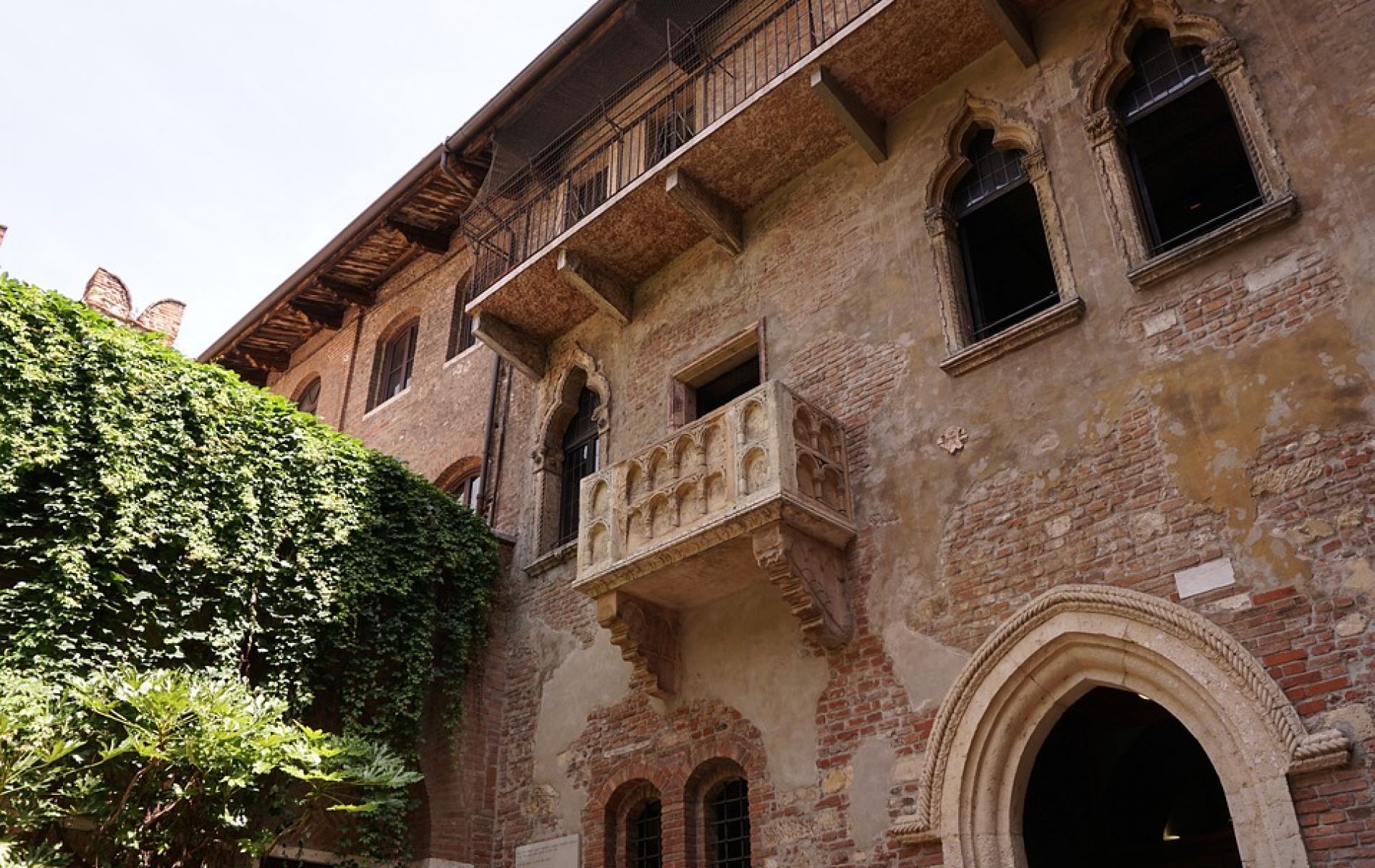
The Museum or Juliet’s House in Verona is housed inside an ancient medieval building, where the Del Cappello family probably lived. Popular legend has it that this is the true birthplace of Juliet.
The House recreates the typical atmosphere of a 16th-century noble dwelling thanks to its frescoes and precious furnishings. Inside the Museum you can admire the costumes and props used in Franco Zeffirelli’s cult film Romeo and Juliet (1968).
JULIET’S TOMB
Juliet’s Tomb is concealed by the 12th-century former convent of Capuchin friars, now the Museum of Frescos.
ROMEO’S HOUSE
The House of the Montagues, is located on the Street of the Scaliger Arches, not far from Juliet’s. Visiting the inner courtyard is not allowed, as it is privately owned. The other part of the house, however, is now occupied by the famous Osteria del Duca, where you can enjoy the most authentic Veronese specialties (bigoli al ragù d’asino or polenta e soppressa).