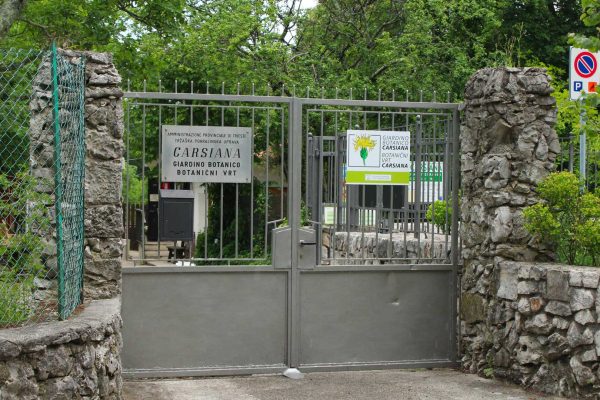
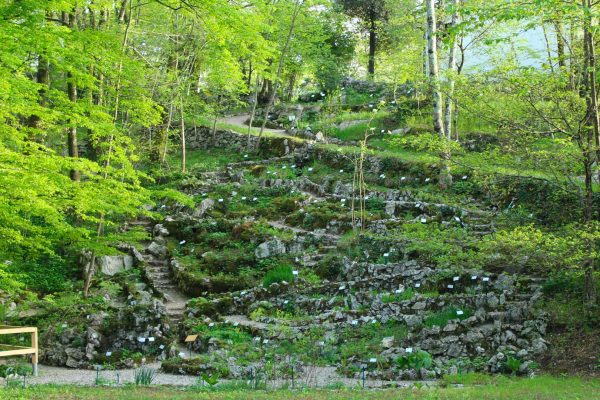
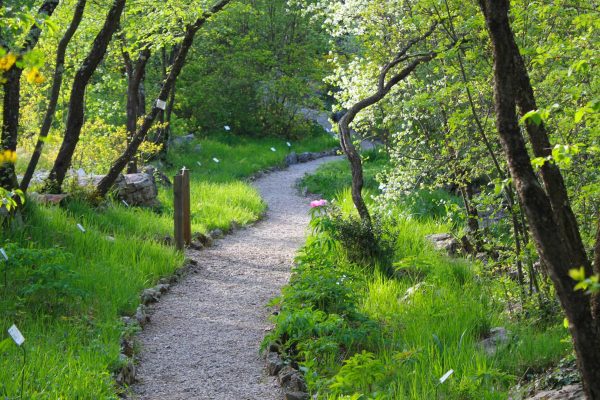
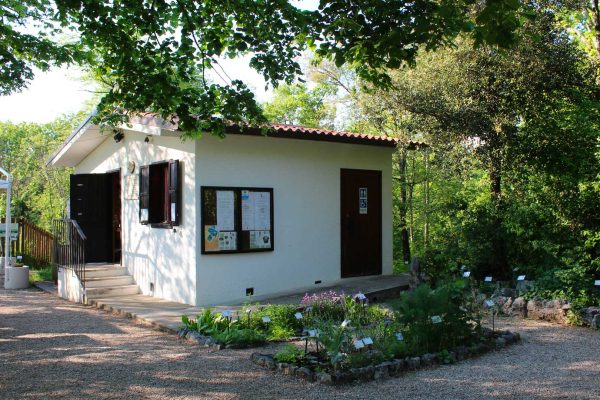
Carsiana was founded in 1964 by the desire of the founders, Dr. Gianfranco Gioitti, Dr. Stanislao Budin and Prof. Livio Poldini. Dr. Gianfranco Gioitti purchased and made the land available, oversaw the establishment of the botanical garden for over 40 years, and served as its Horti Praefectus. They then contributed to the development and floristic enrichment by Dr. Fabrizio Martini and Mr. Eliseo Osualdini, also initially availing themselves of the help of Mr. Giovanni Kocman from Sgonico. The garden was designed with the aim of collecting, preserving and illustrating the spontaneous flora and vegetation of the Carso, but placed in a natural context. The garden contains plant species native to the Carso, placed in their respective environments, which grow along the slopes of the sinkhole that characterizes it.
In 2002, the Garden was purchased by the Province of Trieste, and as of July 1, 2016, it was transferred to the Autonomous Region of Friuli Venezia Giulia.
Maintenance activities, those related to the enjoyment, communication and promotion of the Garden are outsourced. In fact, since December 19, 2018, the management service of Carsiana has been entrusted to the Rogos Cooperative Society.
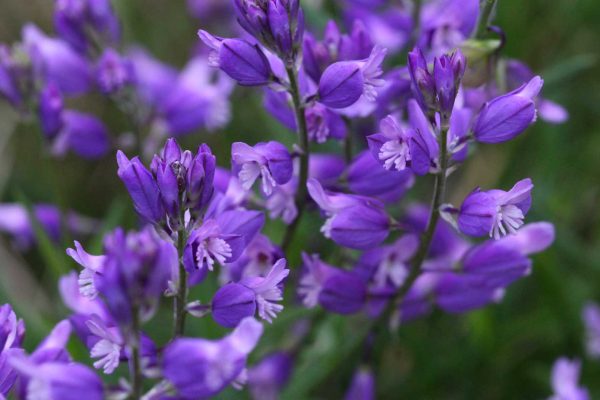
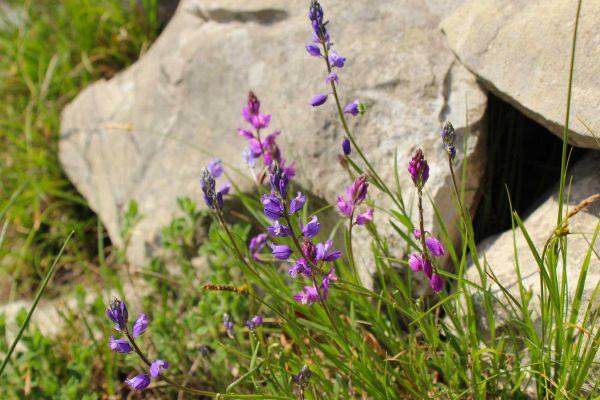
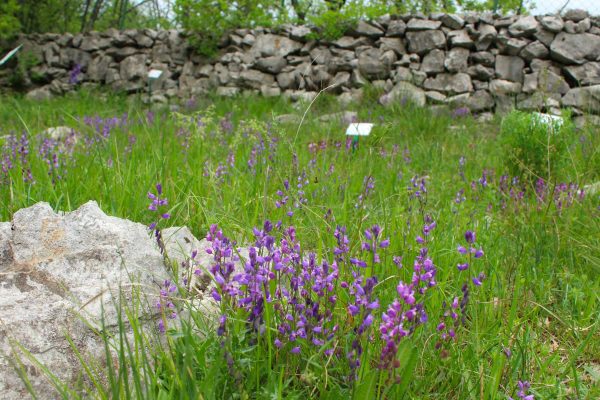
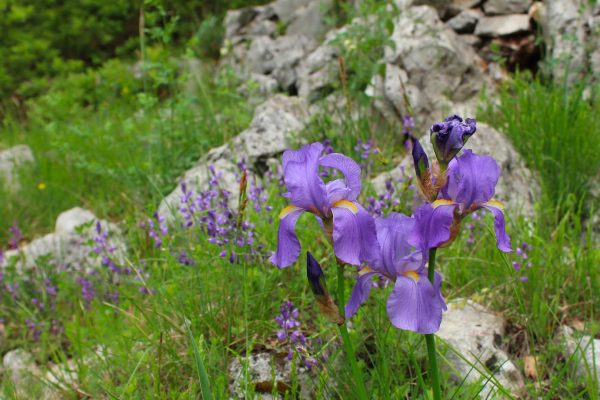
About 600 floristic species are collected in the 5,000 square meters dedicated to a botanical garden. The area was chosen because, in the small patch of land, all the main geomorphological conformations of the karst terrain are naturally represented, with which the respective plant formations have been associated. The natural conformation of the garden allowed the botanical display to be structured according to ecological characteristics rather than systematic laws, thus enabling a more intuitive understanding of the link between vegetation, climate and geology. Carsiana is thus intended to be a “synthesis of the karst landscape” that gives the visitor a comprehensive picture of the main ecological aspects of the area.
The environments that the visitor encounters in Carsiana are:
> karst scrub
> scree
> karst forest
> karst heath
> coastal cliffs
> sinkhole forest
> mountainous Carso
> water bodies
> karstic well
> Mediterranean garden
The display is complemented by several beds dedicated to the Carso’s wild medicinal plants, wild edibles, hedges and graminoid herbs.